
English| EUR
Suggested for you
More currencies
Choose a language
The waters between Tenerife and La Gomera host one of Europe's most reliable cetacean populations. Los Cristianos port serves as the primary departure point for whale-watching excursions into this protected marine corridor. Visitors ask whether sightings are guaranteed—the answer depends on species, season, and sea conditions.
Quick answer
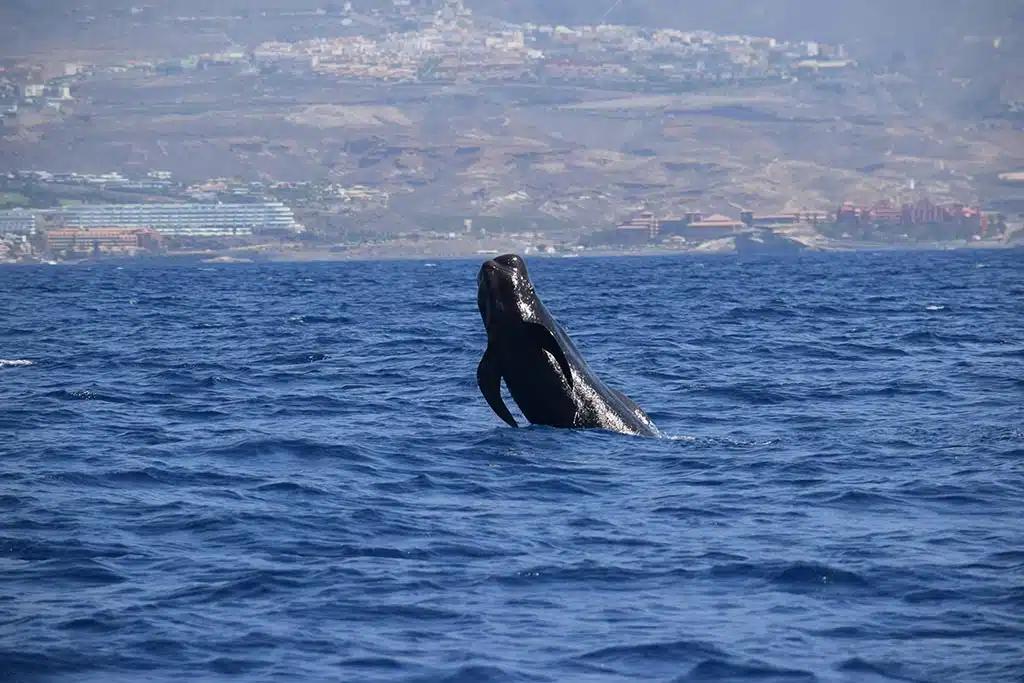
Yes, you can see whales in Tenerife year-round, with pilot whales and bottlenose dolphins resident in the channel between Tenerife and La Gomera. Tour operators departing from Puerto de Los Cristianos report sighting rates above 90 percent during morning departures. Peak activity occurs between November and March when migratory species like fin whales and sperm whales pass through the corridor.
The strait separating Tenerife from La Gomera reaches depths exceeding 1,000 meters within three kilometers of the coast—a topographic feature that draws deep-water cetaceans close to shore. Short-finned pilot whales, which resemble orcas in coloration but grow only to five meters, maintain a resident population of approximately 250 individuals in these waters. Bottlenose dolphins form the second resident species, traveling in pods that range from a dozen to fifty animals. Whale watching in Tenerife operates under strict regulatory frameworks established by the Canary Islands government. Vessels must maintain minimum distances, limit engine noise, and restrict interaction time per pod. The regulations exist because this is one of the few European waters where cetaceans can be observed in their natural environment throughout the calendar year. Los Cristianos serves as the departure hub, with tour boats leaving Puerto de Los Cristianos daily between 09:00 and 18:00. Visitors often ask whether they can see whales in Tenerife during summer months when tourism peaks. The resident pilot whale population remains present, but sea conditions matter more than season. Morning departures between 09:00 and 11:00 offer calmer seas and higher activity levels, as cetaceans surface more frequently in cooler water temperatures. Afternoon swells, particularly in summer, reduce visibility and make tracking more difficult. Migratory species add seasonal variety to the resident population. Fin whales, the second-largest animal on Earth, transit the channel between November and March. Sperm whales, identifiable by their square heads and slow, arching dives, appear sporadically during spring and autumn migrations. Sightings of these larger species are less predictable but occur frequently enough that operators highlight them as bonuses rather than guarantees. The marine corridor between the islands functions as a highway for Atlantic cetacean traffic, positioning Los Cristianos as the access point to one of Europe's most diverse whale-watching zones.
“The strait's thousand-meter depths bring deep-water cetaceans within three kilometers of Tenerife's southern coast.”
Whale watching in Los Cristianos is possible year-round, though the best arrival window is 09:00–11:00. Morning tours generally offer calmer seas and higher chances of observing marine life before wind speeds increase later in the day.
Calmer waters and stable conditions
This timeframe provides the most predictable sea states for sightings.
Mild 20°C–24°C; sea calm
Migratory species often pass through during these months.
Warm 22°C–26°C; light winds
Stable water temperatures continue to support resident pilot whale populations.
Cooler 18°C–21°C; occasional swells
Resident whales remain active, though weather can occasionally impact departure schedules.
Verdict: The best time for optimal conditions is during weekday mornings in April or October when sea states are typically at their calmest.
The port area of Los Cristianos remains open daily to accommodate visitors and boat operators. Access to the embarkation point is available throughout the week during the following hours.
Access to the port area at Puerto de Los Cristianos is free. Costs for whale watching experiences are determined independently by individual boat tour operators.
Verdict: There is no entrance fee to the port, but adult pricing for whale watching excursions depends entirely on the specific tour operator selected.
The whale watching embarkation point is located at Puerto de Los Cristianos, 38650 Arona, Santa Cruz de Tenerife, Spain. Access is straightforward for those arriving by public transport or private vehicle.
Titsa lines 470, 418, or 473 to Los Cristianos Port stop
TF-1 motorway towards Los Cristianos; follow signs for Puerto
Direct drop-off at the port entrance
Aim to arrive between 09:00 and 11:00, as morning tours offer calmer seas and higher chances of seeing active marine life. Parking in the immediate port area is limited, so allow extra time if traveling by car.
Prepare for your whale watching trip with these practical steps, organized by when you'll need them.
Everything you need to know about can you see whales in tenerife
Yes, you can see whales in tenerife by departing from the port of Los Cristianos, which serves as a major hub for marine excursions. Several species, including pilot whales, inhabit the waters year-round due to the deep channels between Tenerife and La Gomera.
The best arrival window is between 09:00 and 11:00, as morning tours offer calmer seas and higher chances of seeing active marine life. Planning your visit for early in the day often provides the most comfortable conditions for boat travel.
There is 0 EUR entrance fee to the port area itself. Please note that boat tours are ticketed independently per operator, so costs for specific excursions will vary depending on your choice.
While operators use their expertise to locate pods, seeing whales in the wild is subject to natural behavior and ocean conditions. You can see whales in tenerife frequently, but sightings remain a wild animal encounter rather than a guaranteed event.
Whale watching is a popular activity for families, and you can see whales in tenerife alongside children on most registered vessels. It is advisable to check with your chosen boat operator regarding their specific age requirements and safety policies for younger passengers.
To prepare for your trip, bring sun protection, comfortable clothing, and a camera to capture the coastal scenery. Since you can see whales in tenerife from the deck, polarized sunglasses are also recommended to reduce glare on the water.
Booking in advance is recommended, especially during peak seasons, to ensure availability for your preferred departure time. Using the booking tools on this site allows you to secure your spot with established local operators.